Overview
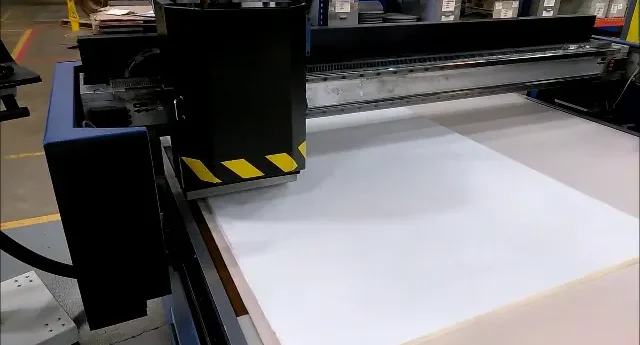
CGR Products offers automated CNC knife cutting services for non-metallic flexible materials, high-density foams, and engineered elastomers. Utilizing computer-controlled oscillating blades and drag knives, CNC knife cutting delivers die-less precision—eliminating hard tooling fees while ensuring perfectly square, clean edges on materials prone to edge concave during traditional die press stamping.
Core CNC Knife Cutting Capabilities
-
Toolless Digital Cutting: Converts digital CAD, DXF, and vector files directly into precision-cut parts. Eliminates wait times and upfront expenses associated with building custom steel rule dies.
-
Zero Edge Concave: Unlike traditional press stamping which can squeeze and distort soft, thick foams (causing concave “hourglass” edges), sharp oscillating blades slice smoothly through substrates for true, perpendicular side walls.
-
Rapid Prototyping to Short-Run Production: Ideal for engineering prototypes, low-to-medium production quantities, and design iterations where tooling costs would otherwise be cost-prohibitive.
-
Clean, Dry Processing: Provides die-less cutting without the moisture or water absorption associated with waterjet cutting—making it ideal for open-cell foams, moisture-sensitive acoustic insulation, and paper/fiber composites.
Technical Specifications Summary Table
| Specification / Attribute | Capability Range / Parameter |
| Cutting Method | Automated CNC Oscillating Blade & Drag Knife Technology |
| Tooling Cost | Low cost over steel rule dies (Direct CAD / DXF / Digital vector file integration) |
| Edge Quality | Clean, perpendicular walls with zero edge concave |
| Primary Advantage vs WaterJet | 100% dry cutting (no water exposure to open-cell or porous materials) |
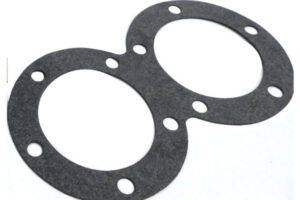
| Primary Materials | Open/Closed Cell Foams, Solid & Sponge Rubber, Felts, Cork, 3M™ Insulation, Non-Woven Fabrics |
| Volume Suitability | Rapid prototypes, short-to-medium production runs, custom layouts |
Frequently Asked Questions:
What is CNC knife cutting?
CNC knife cutting is a toolless digital manufacturing process that uses computer-guided oscillating or drag blades to slice through flexible materials directly from CAD vector files without steel rule dies.
What are the advantages of knife cutting over traditional die cutting?
Knife cutting requires zero hard tooling costs, allows immediate design modifications from digital files, and prevents edge concavity (hourglassing) on thick or compressible foam substrates.
How does knife cutting compare to waterjet cutting?
While both eliminate tooling costs, knife cutting is a completely dry process. This makes it superior for moisture-sensitive materials like open-cell acoustic foam, paper, felt, and delicate fibrous substrates that would absorb water during waterjet processing.
If you want to learn more about our knife cutting solutions, please contact us today. Our knowledgeable staff can provide you with the information that you need.