Neoprene sheet rubber is a general purpose industrial gasket and seal material for use with non-aromatic petroleum oils and greases.
Die cut gaskets and seals are well-known as highly resilient, all-purpose synthetic rubber, Neoprene is one of the industry’s most relied-upon materials.
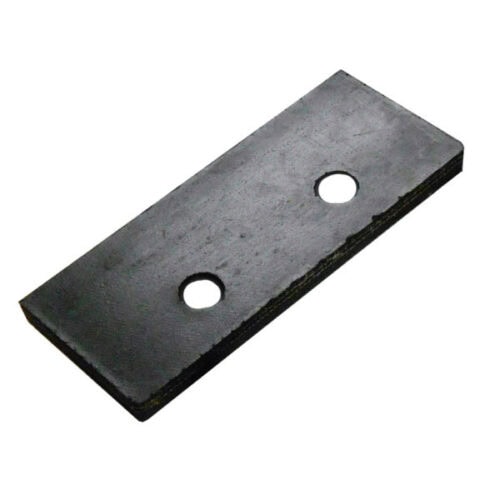
It performs in a multitude of industrial settings, and its resistance to degradation makes it an essential element in a number of different industries.
Neoprene is one of the most versatile materials in existence and has found a place in virtually countless applications. It features a number of important properties, including:
- Excellent chemical resistance — Neoprene works well while in contact with a full range of chemicals and oils, making it a vital part of applications in even the most challenging industrial conditions.
- Works in any weather or temperature — This synthetic rubber resists degradation in a full range of temperature and other outdoor conditions, maintaining integrity while in the sun, ozone, cold, or inclement weather.
- Maintains its properties in any form — Whether customers need Neoprene in solid sheet, open cell, or closed cell forms, it retains its chemical- and weather-resistant properties.
- Tough and resilient — Some of the properties of Neoprene rubber include excellent abrasion resistance, good tear resistance, excellent resilience, and good-to-excellent adhesion to metals. It features a tensile range of 500 to 3000 psi and a durometer range (Shore A) of 20 to 95.
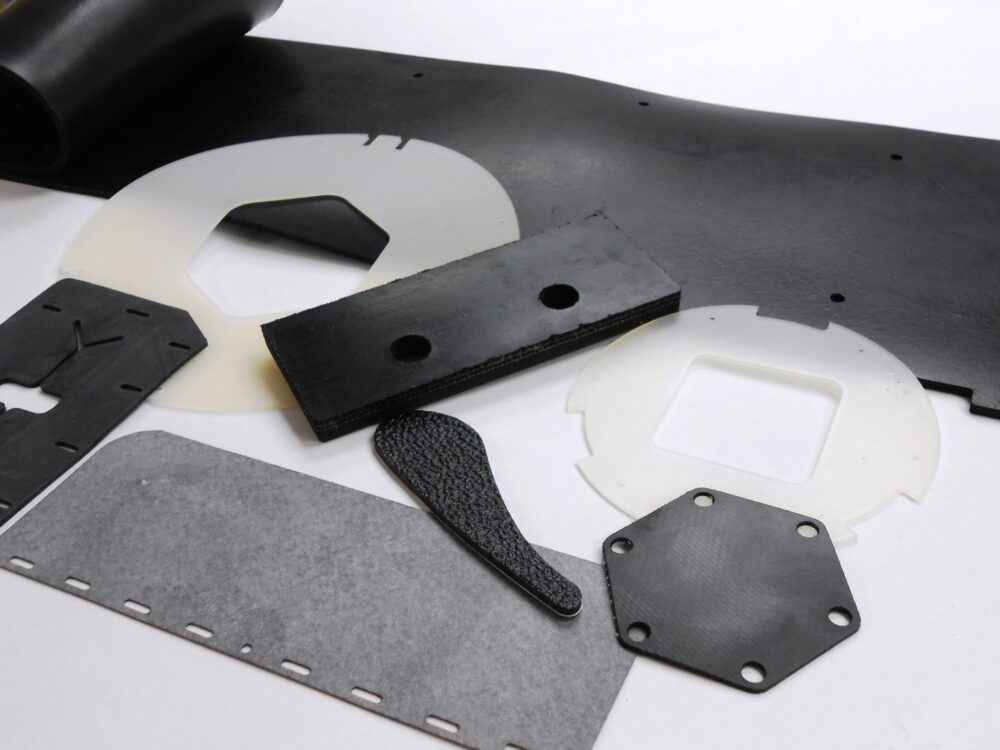
The versatility of Neoprene has made it a mainstay for industrial OEM products. These include hoses, gaskets, and a full array of corrosion-resistant coatings. Neoprene is not limited to these capacities, however, and is very important in areas as diverse as electronics accessories, sports, apparel, musical instruments, and more.
Solid Neoprene Elastomer Grades & Converting Specifications
CGR Products precision converts, slits, laminates, and die-cuts solid chloroprene (Neoprene) rubber sheet and roll goods. Renowned as the industry’s premier all-purpose elastomer, solid neoprene balances mechanical resilience, moderate petroleum and refrigerant resistance, and robust atmospheric weathering. Review the comparative grade matrix below to select the optimal durometer, compound blend, and military/commercial specification for your application.
| Neoprene Grade | Mechanical & Environmental Profile | Durometer & Standards |
|---|---|---|
| Commercial Grade Neoprene | Cost-effective chloroprene/SBR elastomer blend engineered for general industrial sealing. Offers moderate resistance to non-aromatic petroleum oils, greases, water, and atmospheric weathering. Excellent conformability under standard ANSI bolt loads across a continuous temperature range of -20°F to 190°F (-29°C to 88°C). | 40 to 80 Shore A · ASTM D2000 BC · Smooth Finish · Black |
| 100% Premium Pure Chloroprene | Formulated with 100% virgin chloroprene polymer without SBR fillers. Delivers superior resistance to oil swelling, chemical washdowns, Freon refrigerants, ozone, and outdoor weathering. Operates from -30°F to 220°F (-34°C to 104°C) with elevated tensile strength (1,500+ PSI) and long-term elastic recovery. | 40 to 80 Shore A · ASTM D2000 BE · High-Tensile · Black |
| MIL-SPEC Neoprene (MIL-R-6855) | Certified military-specification chloroprene rubber (Class 2, Grade 40/50/60/70). Engineered for severe aviation, naval, and defense environments requiring verified resistance to synthetic oils, fuels, accelerated aging, and low-temperature flexibility down to -40°F. | 40 to 70 Shore A · MIL-R-6855 Class 2 · Full Traceability · Black |
| Flame-Retardant Neoprene | Compounded to meet strict automotive, mass transit, and electronic fire safety mandates. Inherently self-extinguishing upon flame removal; limits smoke generation and toxic combustion byproducts while maintaining an environmental weather seal. | 50 to 70 Shore A · FMVSS 302 · UL 94 HF-1 · Black |
| Cloth-Inserted (CI) Neoprene | Solid chloroprene reinforced internally with 1 to 4 plies of high-strength woven polyester or nylon fabric. Drastically reduces cold flow and lateral creep under heavy flange bolt torques while preventing bolt-hole tear-out in high-vibration applications. | 60 to 70 Shore A · High Flange Bolt Load · Smooth / Fabric Finish |
| FDA Food-Grade Neoprene | Manufactured using FDA-approved ingredients for repeated contact with oily or greasy foodstuffs. Non-toxic, non-marking, odorless, and resistant to food processing animal fats and mild caustic cleaning washdowns. | 50 to 65 Shore A · FDA 21 CFR 177.2600 · White / Off-White |