Overview
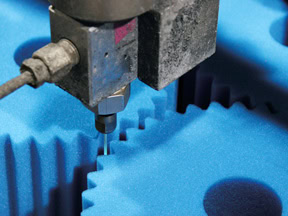
CGR Products provides precision CNC WaterJet cutting services for non-metallic materials, dense rubbers, engineering foams, plastics, and thick laminates. Utilizing high-pressure pure waterjet streams (and abrasive waterjets where necessary), CGR eliminates hard tooling investments while delivering intricate geometries, clean edges, and zero heat-affected zones (HAZ) for prototype and production runs alike.
Core WaterJet Cutting Capabilities
-
Zero Tooling & Rapid Prototyping: WaterJet cutting requires no steel rule dies or hard tooling. Converts DXF/CAD files directly into physical parts in minutes, dramatically lowering upfront costs and allowing fast design iterations.
-
Thick & Dense Material Processing: Easily slices through thick foam blocks, heavy solid rubber sheets, and layered composites up to 9 inches thick without edge concave or distortion.
-
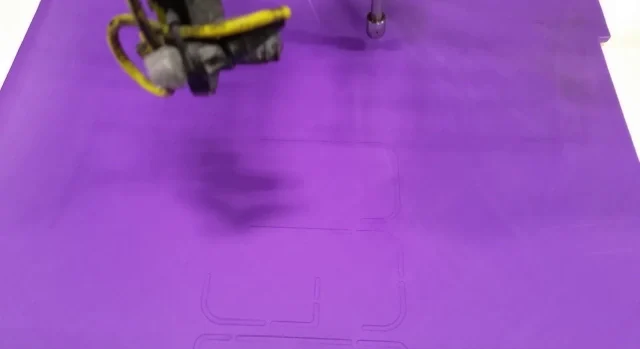
Multi-Head Efficiency: Multi-head CNC cutting beds run duplicate parts simultaneously, matching high-volume production throughput while retaining zero-tooling benefits.
-
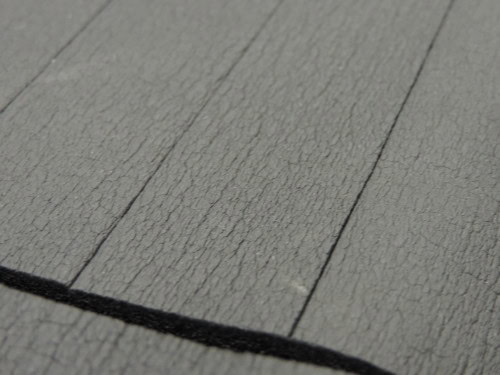
No Heat-Affected Zone (HAZ): Pure cold-cutting technology prevents thermal distortion, material scorching, chemical degradation, or hardening along part edges—critical for sensitive gasketing materials.
Technical Specifications Summary Table
| Specification / Attribute | Capability Range / Parameter |
| Max Cutting Bed Size | Up to 72 inches x 144 inches |
| Max Material Thickness | Up to 9.0 inches thick |
| Tooling Cost | Low cost compared to steel rule dies (Direct CAD/DXF file integration) |
| Cutting Method | Pure WaterJet (and Abrasive WaterJet for rigid substrates) |
| Tolerances | Maintained to tight RMA / commercial tolerances |
| Primary Materials | Solid Rubber, Sponge, Poron®, Polyurethane, Plastics, Compressed Fiber |
| Key Advantage | No Heat-Affected Zone (HAZ) & zero edge thermal distortion |
Frequently Asked Questions:
What are the main benefits of waterjet cutting over traditional die cutting?
Waterjet cutting requires low tooling costs, allowing immediate production directly from CAD files. It also handles extreme material thicknesses (up to 9 inches) without edge beveling and leaves zero heat-affected zones (HAZ).
What materials can be cut using waterjet cutting?
CGR Products cuts a broad range of non-metallic materials including closed-cell sponge, solid rubber, polyurethane foam, PORON®, plastics, cork, felt, compressed fiber, and adhesive-backed composites.
Does waterjet cutting damage material edges with heat?
No. Waterjet cutting is a cold-cutting process. It uses high-pressure water streams to shear through materials without generating heat, preserving material integrity, density, and physical properties right to the cut line.