Foam materials are lightweight, versatile, and durable, which makes them an ideal option for gaskets and seals across many of the industries that we serve.
CGR Products can fabricate and die cut a variety of foam and sponge rubber materials. Foam is incredibly efficient to work with as CGR can hold tolerances as low as .015” on materials with a firmer durometer.

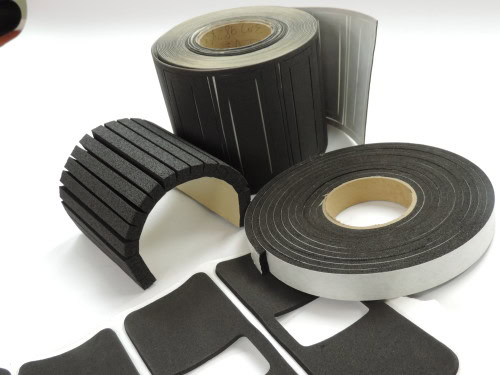
We offer both open and closed cell foam materials, and our customers have used foam rubber gaskets and sealants across a number of industries including appliances, automotive, electronics, HVAC, lighting, marine, power equipment, and many more.
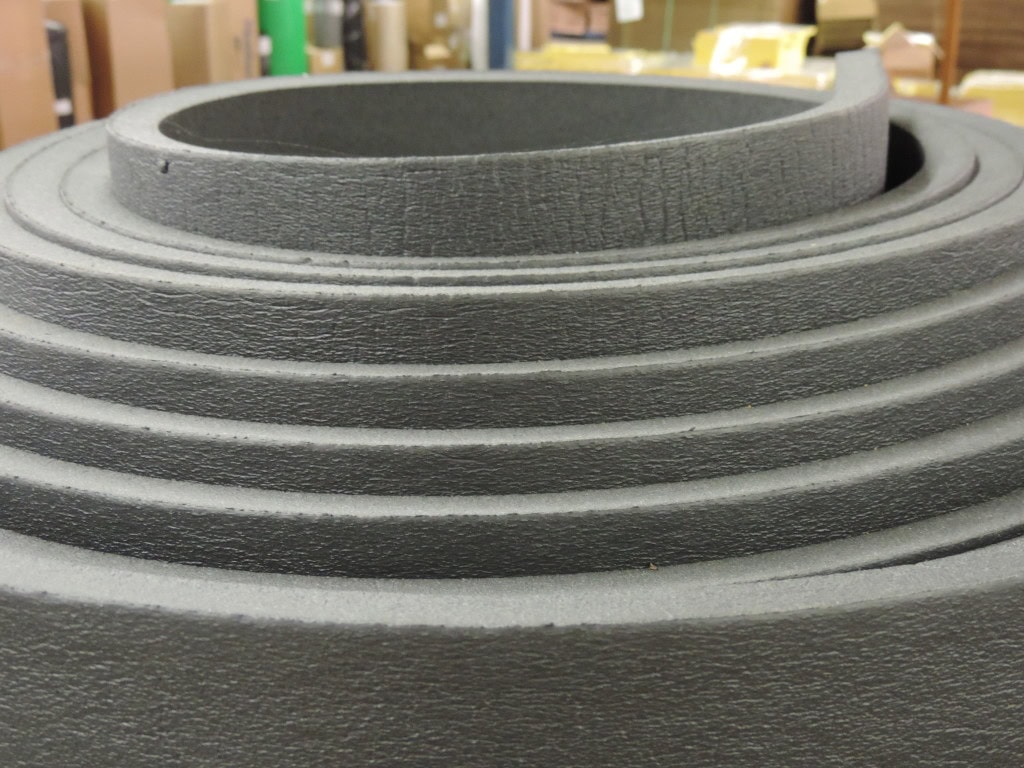
The range of foam rubber materials we offer includes:
- Neoprene
- EPDM, SBR and Neoprene blends
- Polyurethane
- PVC/NBR
- Silicone
- Volara (XLPE)
- Microcell Urethane Foam (PORON)
- And more
Foam rubber can fill large voids and gaps, and also has cushioning properties to help lessen impact between two substrates. Closed cell foam is perfect for sealing and helps reduce liquid and gas flow whereas open cell foam offers more flexibility and can be manufactured in either high or low density.
Foam can also be treated to have resistance properties depending on the intended application. It can be laminated and applied with adhesives that withstand intense pressure situations. Foams are naturally resistant to fire and burning and can be sealed to withstand many chemicals and acids. Additionally, foam is ideal for outdoor applications because it resists weathering, UV rays, and fungi.
Open & Closed Cell Foam Materials & Converting Capabilities
CGR Products precision converts, slits, laminates, and die-cuts an extensive range of open-cell and closed-cell elastomeric foams, microcellular urethanes, and cross-linked polyolefins. Please view the table below for a complete list of open and closed cell foam materials.
| Open & Closed Cell Foam | Description | Suppliers & Specs |
|---|---|---|
| EPDM Closed Cell Sponge | 100% pure expanded EPDM closed-cell sponge rubber. Provides outstanding resistance to ozone, ultraviolet light, continuous outdoor weathering, and elevated temperatures. Delivers watertight, airtight environmental sealing under low bolt closure force for exterior enclosures, HVAC units, and automotive lighting. | Armacell · K-Flex · Monmouth |
| Neoprene Closed Cell Sponge | 100% pure chloroprene closed-cell sponge elastomer. Delivers excellent physical toughness, moderate oil and grease resistance, refrigerant tolerance, and self-extinguishing flame resistance. Widely specified for industrial equipment doors, refrigeration compressors, and marine hatch seals. | Armacell · Monmouth Rubber · K-Flex |
| Neoprene / EPDM / SBR Blends | The most versatile, cost-effective closed-cell sponge in the gasket industry. Combines the weather and ozone resistance of EPDM with the chemical durability of Neoprene. Meets ASTM D1056 2A1/2A2 classifications and forms the foundation for UL 50E / UL JMLU2 enclosure listings (such as CGR 8002). | Armacell · Monmouth · K-Flex |
| Buna-N / Nitrile Closed Cell Foam | Closed-cell acrylonitrile butadiene rubber (NBR). Specifically engineered for applications requiring superior resistance to petroleum hydrocarbons, motor fuels, diesel, and hydraulic oils without swelling or degrading. | Monmouth Rubber · Armacell |
| PVC / Nitrile (NBR) Blends | Flexible closed-cell elastomeric blend available in continuous rolls. The addition of PVC enhances ozone, solvent, and abrasion resistance, making it an excellent barrier for thermal pipe insulation, automotive fuel-tank isolation, and refrigeration gaskets. | Armacell (EnsoLine®) · K-Flex |
| Closed-Cell Vinyl / PVC Foam | Economical closed-cell expanded vinyl foam requiring approximately 30% compression deflection to create an airtight, watertight, and light-tight seal. Highly conformable to curved surfaces; widely used in window glazing, HVAC access doors, and appliance vibration stripping. | Gaska Tape · Novagard |
| Silicone Sponge & Foam | Closed-cell elastomeric silicone engineered for extreme service temperatures ranging from -100°F to 400°F (-73°C to 204°C). Flame-retardant (UL 94 V-0), zero halogen outgassing, and virtually immune to UV radiation and ozone cracking in aerospace, mass transit, and harsh industrial enclosures. | Rogers BISCO® · Saint-Gobain · Diversified |
| Cross-Linked Polyethylene (XLPE / Volara®) | Continuous, smooth-skinned closed-cell polyolefin foam. Features extremely low water absorption, exceptional thermal insulation (low K-factor), chemical inertness, and thermoformability. Widely utilized in medical packaging, adhesive tape backings, and automotive interior padding. | Sekisui Voltek · Palziv · Worldwide Foam |
| EVA (Ethylene-Vinyl Acetate) | Highly resilient closed-cell copolymer foam offering superior mechanical tear strength, high impact absorption, and excellent moisture resistance. Popular in flotation devices, sporting equipment, packaging inserts, and footwear components. | Vulcan Plastics · Palziv |
| Microcellular Urethane Foam (PORON®) | High-density open microcellular urethane foam known for industry-leading compression set resistance (<2%), zero plasticizers, and non-fogging outgassing. Delivers permanent elastic rebound and shock isolation in electronics, handheld displays, and battery pack cushioning. | Rogers PORON® · Saint-Gobain |
| Semi-Open / Crushed Cell EPDM Foam | Crushed-cell sponge engineered for ultra-soft applications requiring near-zero closure force. Fills irregular gaps and complex seams under light compression while expanding to maintain an acoustic and water-resistant barrier without buckling delicate plastic housings. | Armacell · Monmouth Rubber |
| Standard Polyurethane (Open Cell) | Cost-effective flexible polyether and polyester open-cell urethanes. Features an interconnected pore network ideal for dust exclusion, acoustic sound absorption, NVH vibration dampening, and mechanical shock cushioning. | Woodbridge · Future Foam · Crest |
| Reticulated Polyurethane Filter Foam | Thermal or chemically reticulated foam with 100% open pore structures, calibrated from 10 PPI to 100 PPI (pores per linear inch). Available in polyether (water resistant) or polyester (fuel/oil resistant) for air filtration, sound attenuation, and fluid metering. | Crest Foam · Woodbridge · Inoac |
Frequently Asked Questions: Foam Gaskets & Converting Capabilities
What is the primary difference between open-cell and closed-cell foam for gaskets?
The primary difference is the structure of the cells and their ability to block fluids:
- Closed-cell foam: Consists of discrete, fully enclosed gas cells trapped in an elastomeric matrix. It acts as an impermeable barrier against water, air, moisture vapor, and gases under low compression, making it the industry standard for outdoor weather seals and NEMA enclosures.
- Open-cell foam: Consists of interconnected cellular struts that permit air, sound, and fluid passage. It is significantly more flexible and compressible under minimal force, making it ideal for acoustic sound absorption, NVH damping, interior dust filtration, and mechanical cushioning.
How much compression is required to create a watertight seal with foam rubber?
For most closed-cell sponge rubbers (such as Neoprene, EPDM, and CGR 8002), a compression deflection between 25% and 30% provides an effective watertight and airtight seal without over-compressing the material. Compressing closed-cell foam beyond 50% can rupture cellular walls, degrade elastic memory, and induce premature compression set failure. Closed-cell PVC foams generally require at least 30% compression to achieve a complete water and light barrier.
Can CGR Products laminate pressure-sensitive adhesives (PSA) to both open and closed-cell foam?
Yes. CGR Products utilizes wide-web rotary hot-roll lamination and cold-pressure presses to bond high-performance acrylic, synthetic rubber, and silicone pressure-sensitive adhesives to foam substrates. For open-cell urethanes and porous foams, supported transfer tapes with polyester (PET) or scrim carriers are applied to prevent the adhesive from sinking into the open pores and to maintain dimensional stability during assembly.
What does “PPI” mean in reticulated open-cell filter foam?
PPI stands for Pores Per Linear Inch and measures the cell pore density in reticulated foams. A lower PPI number (such as 10 to 20 PPI) features large, open pores designed for coarse particulate filtration, oil-mist separation, and minimal air resistance. A higher PPI number (such as 60 to 100 PPI) contains very dense, tiny pores designed for fine dust trapping, acoustic dampening, and high-efficiency small-engine air intake filters.
What die-cutting and fabrication methods are used to cut flexible foam parts?
CGR Products converts open and closed-cell foams using multiple precision manufacturing methods:
- Rotary Die Cutting: High-speed converting on continuous rolls with kiss-cutting and tabbed liners for rapid assembly.
- Knife Cutting & Slitting: Precision foam stripping and custom slit rolls down to narrow widths without edge concavity.
- CNC Waterjet Cutting: Multi-head pure waterjet systems cut thick, large-format, or complex foam gaskets up to several inches thick without requiring custom tooling dies.
Request a Custom Quote
Need assistance determining the optimal density, polymer compound, or compression deflection rating for your sealing challenge? Our engineering team provides material recommendations, ASTM testing verification, and prototypes for OEM’s