At CGR Products, we laminate many different materials on a daily basis. We laminate materials up to 84″ wide and as thin as .062″. Materials range from closed cell foam to heavy fabrics. Explore our lamination services, including hot roll lamination expertise.
Hot Roll Lamination
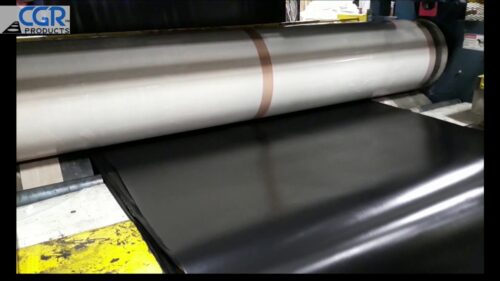
Hot Roll lamination applies an adhesive between two other substrates in web form to bond the two together. Typically, this involves applying adhesive over a heated drum. The heated drum helps the adhesive flow just before being applied to the substrate at a nip roller.
Another application of hot roll lamination is known as Fusion. This is where a substrate is fused with another web by chemical or heated reaction. For Example: When adding a film barrier to Foam, the lamination is achieved by passing the foam and film through a set of heated Teflon-coated rolls at the correct speed and temperature which fuses the film to the foam, making a permanent bond.
Hot Roll Lamination Specifications
| Parameter / Metric | CGR Hot Roll Capability |
|---|---|
| Maximum Web / Roll Width | Up to 84 inches wide |
| Primary Bonding Technology | Custom-built hot roll laminators using heated drums, platens, and nip rollers |
| Adhesive Methods | Glue web lamination, heat-reactivatable adhesive films, and thermal bonding webs |
| Compatible Substrates | Carpets, textiles, non-wovens, polyurethane & polyethylene foams, barrier films, and plastics |
| Key Engineering Advantage | Uniform pressure and heat distribution across wide webs for permanent, wrinkle-free multi-layer bonds |
CGR Products Hot Roll Lamination
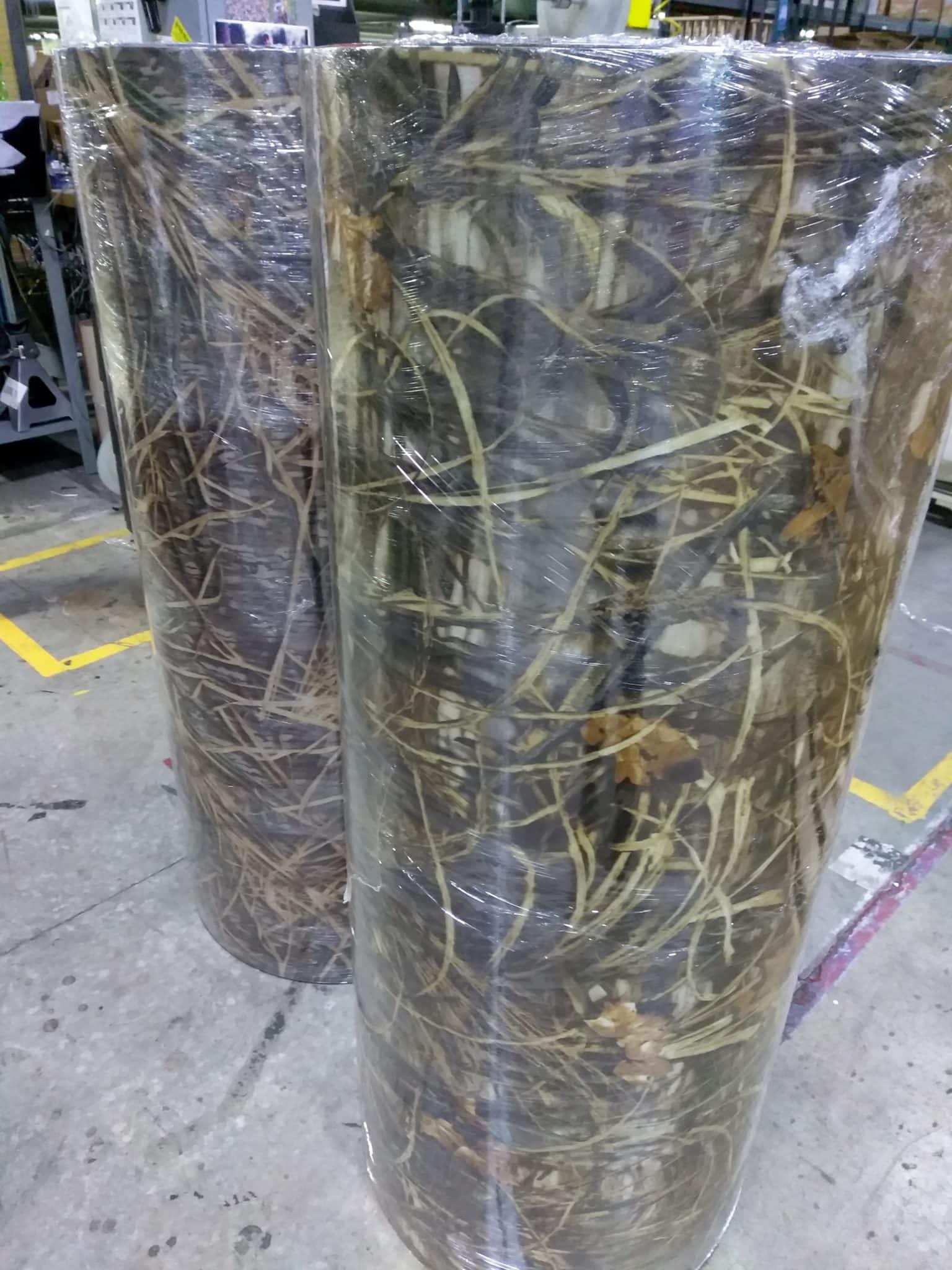
CGR Products utilizes a custom built laminator for hot roll lamination, accommodating bonding multiple types of substrates. CGR Products hot roll laminator will handle materials up to 84″ wide. Our laminator is well suited for materials such as carpet and textiles. Multiple layers of materials can be laminated at one time and our process can be used with a film, non-woven, fabric, or even another foam.
A common use for this machine is the process of glue web lamination. Glue webs are nonwoven webs made of 100% thermoplastic adhesive polymer resins and can laminate a variety of materials. This process can bond materials such as textiles, nonwovens, foams, films, carpet, and plastics or allow customers to reactivate the adhesive with heat when parts are ready to be installed using this process.
CGR Products lamination service includes such markets as automotive trim, marine trim, carpeting, upholstery, medical, electronics, and aerospace. Our continuous roll to roll lamination allows for high production rates to keep costs competitive, and this process is especially efficient for hot roll lamination applications.
Frequently Asked Questions About Hot Roll Lamination
What is hot roll lamination and how does it work?
Hot roll lamination is a continuous bonding process that passes multiple substrate layers through heated rollers (drums or platens) under controlled nip pressure. The heat activates thermoplastic adhesives or polymer webs, fusing the layers together permanently across a continuous roll.
What is the maximum width CGR can process using hot roll laminators?
CGR Products operates custom-built hot roll laminating equipment capable of handling materials up to 84 inches wide, making it ideal for wide-format industrial applications, textiles, carpets, and large acoustic insulation blankets.
What materials are best suited for hot roll lamination?
Hot roll lamination is ideal for combining flexible materials such as carpets, textiles, non-wovens, plastic films, and open- or closed-cell foams. It is frequently paired with glue web adhesives to bond dissimilar materials cleanly and efficiently.
Learn More
To learn more about our capabilities, including our expertise in hot roll lamination, visit our laminating services page. Feel free to click around our website or visit our Applications Page to view a portfolio encompassing many of the industries we serve.