The Challenge:
New EPA regulations required a hose manufacturer to alter the construction of its assembly. Comprised of fuel line “Y” fittings, fuel filters, check valves, and spring steel hose clamps, each connection point on the assembly featured a variety of compression seals — some of which were offered by spring clips or various barb configurations to which the fuel lines attached. For a custom assembly, these construction changes created new complexities.
The new EPA regulations, which resulted in a trickle-down effect for the hose manufacturer, required a change in hose construction. The remodeled hose — a two-part design with an inner and outer layer — was approved to meet regulations but was less elastic than the original model.
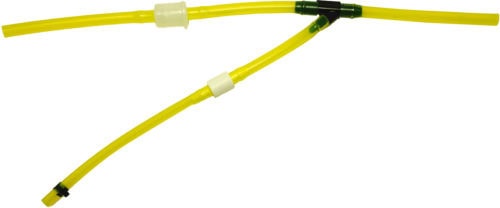
Our customer’s sub-assemblers and field technicians immediately ran into problems. Internal efficiencies diminished, increasing production costs and requiring overtime to meet our customer’s delivery demands. The customer was also experiencing new leaking issues, and technicians were struggling to maintain hose integrity as self-destructing problems arose during repair attempts. Managing custom assembly projects can introduce these types of challenges during retrofits.
The new design had many unforeseen challenges that required immediate solutions.
The Solution:
CGR assigned a team of associates to brainstorm solutions for all known problems. First, we tackled field failures and delivery problems. The difficulties in manual assembly rendered us unable to control the process, so we designed and built a custom automation assembly machine, essentially creating a tailored custom assembly process.
This ensured consistent quality and increased throughput.
“Pulling out all the stops,” an eager team submitted a creative design to maintenance, and CGR purchased equipment to test for leaks. The automation equipment produced parts that passed testing with flying colors!
While the new automation allowed CGR to meet customer demands and eliminated the quality challenges, our customer and field technicians were still experiencing issues. Our customer visited our CGR facility in Waukesha, WI, to see the automation equipment and discuss pending concerns. Together, we worked with the hose supplier to seek a softer hose composition to aid in overall ease of assembly. Our automation equipment enabled us to continue production until the latest hose configuration was submitted, approved by the EPA, and tested for user friendliness. With every custom assembly, collaboration and adaptability remain essential.
CGR is constantly working with engineers on these types of challenges. Contact us today to see how we can assist your business with a similar challenge. In fact, our expertise in custom assembly projects helps resolve complex engineering issues.
—
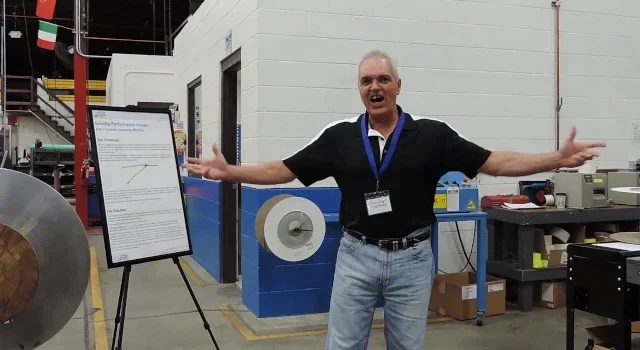
Watch Brian Bagget deliver a live presentation of this project’s details at our Open House.