Don’t Get Tangled Up in Terminology
The CGR team gets a lot of requests for cutting, converting, and fabricating. Fortunately for our customers, we do it all. As far as we’re concerned, these terms refer to the same process — the process of transforming a raw material into a precision component for your part. In the end, the difference between cutting and converting is often just terminology.
If you participated in Manufacturing Day this month, you may have gotten a chance to dig into some of the processes and services from manufacturers across the country. We’re happy to break down some of our cutting capabilities right here, right now, highlighting the distinction of converting versus cutting throughout our solutions.
We specialize in flexible, non-metallic materials at CGR Products — that means custom parts, shapes, sizes and forms for markets of all kinds, cut from an immense range of elastomer, rubber and related thermoplastic materials. Each and every material — and family of materials — comes with specific capabilities to accommodate all types of industries. These capabilities include both converting and cutting opportunities.
Cutting, Converting or Fabricating?
As we said above, we do it all. Some of the specific methods we use to cut and convert materials at CGR include methods that can be classified as cutting vs. converting depending on the application.
Die Cutting: Both rotary die cutting and flatbed die cutting are optimal for high volumes and precise tolerances.
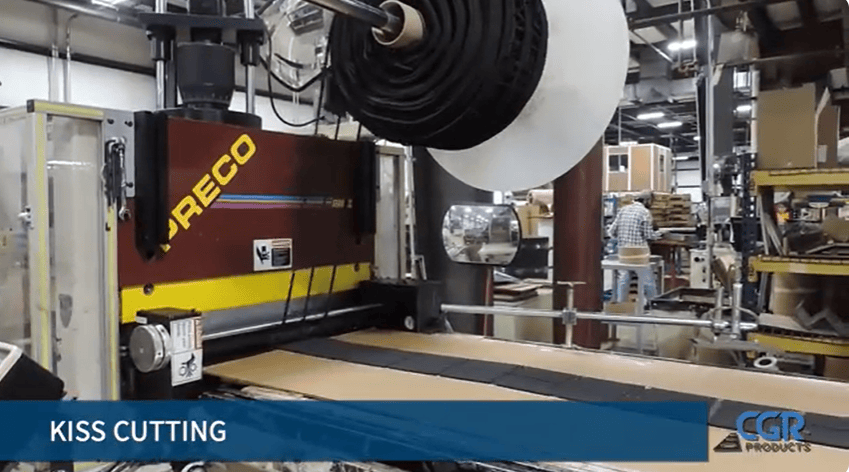
Kiss Cutting: This special type of cutting (or converting) transforms sheets of material into sheets of parts that can be removed individually from a backing or liner. You may wonder which techniques are considered cutting versus converting in your project.
Knife Cutting: This is one of the fastest methods for producing a part. It’s great for prototypes, and sometimes knife cutting is grouped with converting depending on requirements.
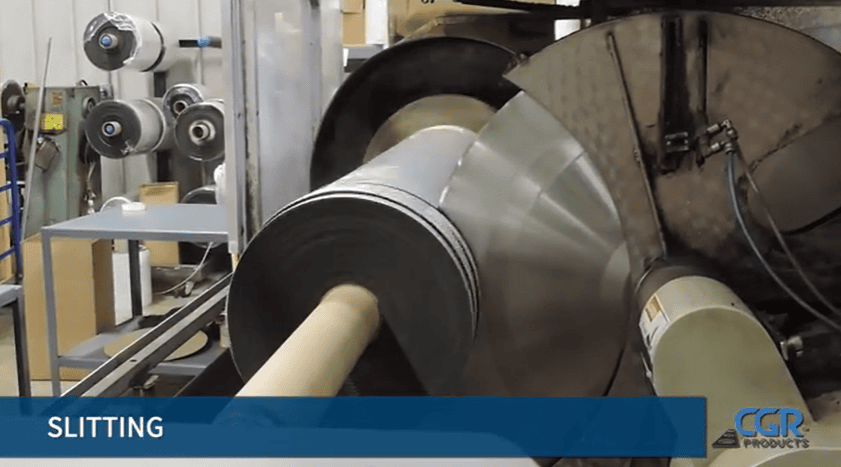
Slitting and Splitting: A shearing process, slitting or splitting takes a large roll and trims it into narrower or thinner rolls or sheets. Often, the choice comes down to whether cutting vs. converting is needed for your material.
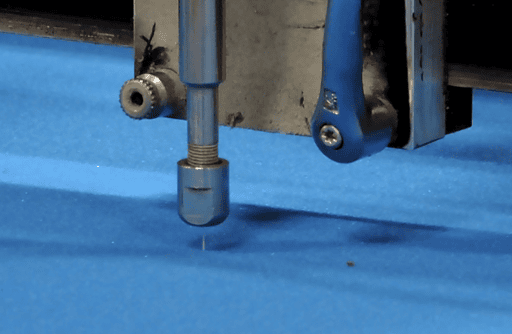
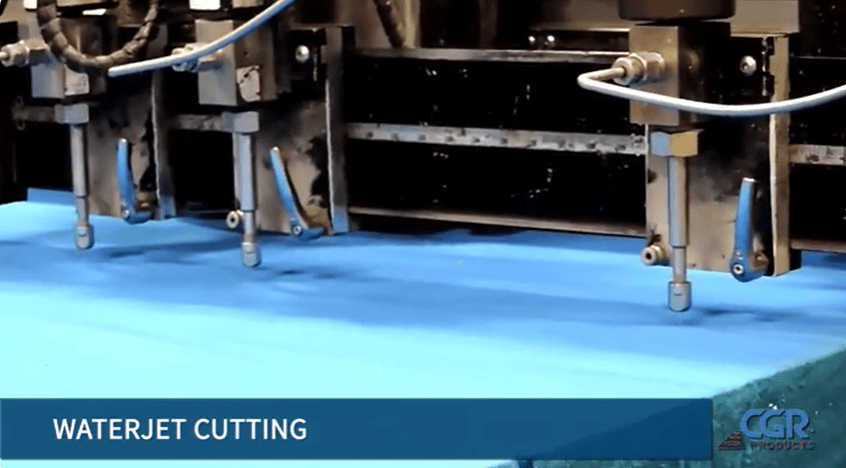
Waterjet Cutting: The accuracy and precision of a water jet cutter is ideal for soft materials, and it’s another example where cutting and converting methods overlap.
Don’t forget that we also offer custom manufacturing and fabrication for projects that demand molding, extrusion. laminating and beaded gaskets. Sometimes, your needs may require converting instead of cutting, depending on the material and shape.
Check out all of our available services, or call the team to discuss your particular project today. We look forward to partnering with you on converting projects, as well as cutting solutions!